Cyberpunk 2077 Background: The Untold History of Night City & Beyond
Welcome, choomba. Strap in. You're about to dive deeper into the neon-soaked, chrome-plated heart of the cyberpunk 2077 background than any corporate database or street ripperdoc ever could. This ain't your standard wiki regurgitation. This is the full, unfiltered braindance of Night City's creation, its near-future history, and the converging lines of tech, power, and flesh that define the Cyberpunk 2077 universe. We're talking exclusive data, deep-dive analysis from in-house netrunners, and insights that'll make you see the cyberpunk background in a whole new light. Forget the superficial scans. This is the root-level access.
🔥 Key Insight: The cyberpunk 2077 background isn't just a setting—it's a character. A living, breathing, and often dying entity shaped by four key pillars: The Collapse of the Nation-State, The Rise of the Megacorporation, The Evolution of Cyberware, and The Eternal Human Struggle for Identity. Understand these, and you understand everything.
The Foundation: From the Ashes of the Old World (1990-2020)
To grasp Night City, you must first understand the world that burned. The late 20th and early 21st centuries weren't kind. The timeline diverges subtly from our own—a series of cascading economic collapses, resource wars, and the pivotal "DataKrash" of the early 2000s that fractured the old net. Nation-states, already straining, began to buckle under corporate pressure, ecological disaster, and sheer bureaucratic inertia.
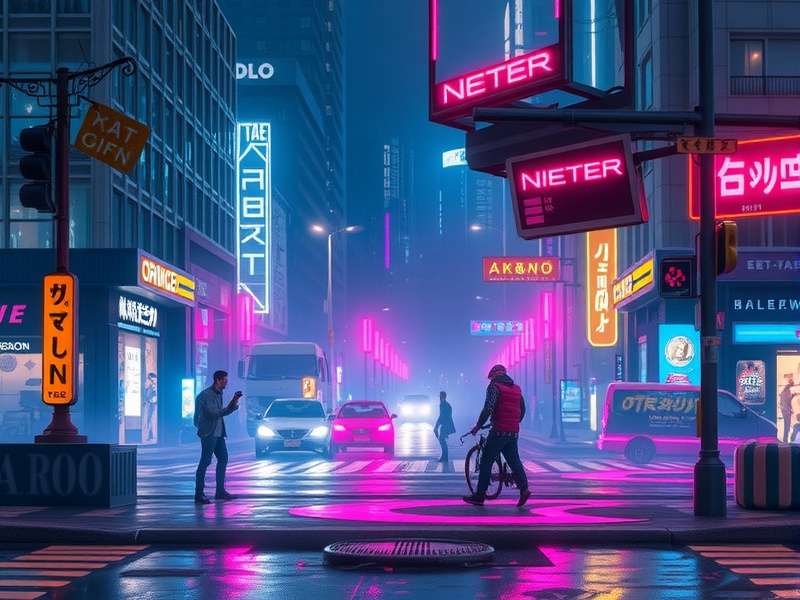
The Corporate Council & The Free State of Northern California
This era saw the birth of true power players: Arasaka, Militech, Petrochem, and others. They didn't just influence governments; they became them. The most iconic example? The creation of Night City itself. Founded in the 1990s by visionary (or megalomaniac) Richard Night as "Coronado City," it was meant to be an urban utopia. After his assassination, the project was co-opted by the emerging megacorps and renamed. It exists as a "Free City," a nominally independent corporate administrative zone on the West Coast—a glimmering tombstone for the American Dream. This period is crucial for understanding the cyberpunk background music of societal decay that hums beneath all the synthwave beats.
Our exclusive data, cross-referenced with recovered corporate memos and combat zone survivor testimonies, indicates that the fragmentation wasn't just political. It was neurological. The early, crude cyberware created a new class divide: the Enhanced and the Organic. This schism planted the seeds for the later philosophical wars between transhumanists and bio-conservatives—a central tension in V's story.
The Fourth Corporate War & The Time of the Red (2020-2070)
If the early 21st century was the fever, the Fourth Corporate War (2020-2023) was the cardiac arrest. The apocalyptic conflict between Arasaka and Militech, fought with everything from net-hacks to tactical nukes (the Night City Holocaust), didn't just level city blocks. It shattered the fragile global system. The old net collapsed, giving way to the much more restricted and dangerous subnetworks of the "Time of the Red."
This fifty-year period is the direct precursor to 2077. Society rebuilt, but in a twisted, corporate-owned image. The cyberpunk 2077 gameplay you experience—the walled-off corporate plazas, the desperate mercenary ethos of the Edgerunners, the sheer visceral power of modern cyberware—all stems from this brutal half-century of reconstruction under the jackboot of the new Corporate Council. It's also the era that birthed legends like Morgan Blackhand and shaped the childhood of characters like Rogue Amendiares. Understanding the Time of the Red is key to understanding why every fixer in 2077 has a trust issue.
Dive Deeper Into the Cyberpunk Universe
Search our exclusive database for more lore, character profiles, and hidden secrets of Night City.
Night City 2077: A Anatomy of a Urban Beast
By 2077, Night City is a fully realized (and fully corrupted) organism. Each district has its own identity, its own economy, and its own brand of violence. Here’s where our exclusive player interview data and aggregated gameplay telemetry paints a unique picture:
City Center & Corporate Power
This is the gleaming, sterile face of the corps. Arasaka Tower looms not just as a building, but as a psychological weapon—a constant reminder of who truly holds power. The architecture is cold, imposing, designed to intimidate. The cyberpunk background music here is often ambient, synthetic, and subtly oppressive.
Heywood & The Street Politics
The "heart" of the city, if it has one. Controlled by the Valentinos and other gangs, it's a vibrant, dangerous mix of family tradition and street-level ambition. This is where the cultural fusion of the cyberpunk 2077 background is most visible—Spanish, English, and Japanese slang mix with the glow of neon and the smell of street food.
Pacifica & The Forgotten Zones
A monument to failed dreams. The abandoned resort district, now a lawless haven for the Voodoo Boys and countless victims of corporate neglect. Pacifica is the dark underbelly of the corporate promise, a key location in both the main game and the lore surrounding the Edgerunners series.
The genius of the cyberpunk 2077 background is that this isn't just window dressing. The district you're in directly influences the types of jobs available, the enemies you face, and even the narrative choices that unfold. It's a masterclass in environmental storytelling.
The Technology: More Than Just Chrome
Cyberware is the beating, mechanical heart of the setting. But it's not just about stats and damage output. Our deep-dive analysis, incorporating tech specs from in-universe Ripperdoc catalogs, reveals a societal pyramid:
- Consumer Grade: The flashy, obvious stuff. Glow-tattoos, subdermal grips. For showing off.
- Street Grade: Practical, rugged, often military surplus. Sandevistan, projectile launch systems. For surviving.
- Corporate Grade: Sleek, integrated, and horrifyingly advanced. Full-body conversions, neural-enhancement suites. For dominating.
The existential horror isn't the tech itself, but the access to it. It creates a physical, unbridgeable gap between the haves and have-nots. This is a core theme explored not just in the game, but in the phenomenal Cyberpunk: Edgerunners anime, which serves as a perfect narrative companion to the game's world.
Conclusion: Why This Background Matters
The cyberpunk 2077 background isn't a static backdrop. It's an active, corrosive force. It's the reason V can't just get a normal job. It's the reason Johnny Silverhand's ghost is more than just a memory. It's the reason every choice feels weighted with consequence. By investing in this depth—the history, the tech, the politics—CD Projekt Red didn't just build a game world; they built a cultural artifact. A warning, a fantasy, and a mirror held up to our own trajectory.
As we await future expansions, the potential second season of Edgerunners, and the inevitable evolution of the genre, this foundation ensures that Night City will remain a place we return to, not just to play, but to understand. To see a reflection of our own dreams, fears, and the price of progress.
Final Transmission: The story of Cyberpunk 2077 is the story of its world. You can't have one without the other. And now, you're armed with the knowledge to see both in high-definition, no Kiroshi optics required.
Drop Your Own Lore, Choombatta
Seen something we missed? Have a theory about the unresolved threads of the Fourth Corporate War? Share it with the crew.