🌑 The Dark Origins: Where Did Cyberpunk Come From?
📚 Literary Roots — The Neuromantic Revolution
The term Cyberpunk Background Story begins with a literary movement. In the early 1980s, authors like William Gibson (〈Neuromancer〉, 1984), Bruce Sterling, and Pat Cadigan painted futures where high tech met low life. Gibson's vision of a sprawling, multicultural, neon-soaked metropolis — Chiba City — became the archetype for every cyberpunk setting that followed.
But the real genius was the punk part. These weren't stories about heroic hackers saving the world. They were about survival — about people crushed by systems so large they'd lost all humanity. The protagonists were outsiders, criminals, artists, and addicts who used technology not for progress, but for escape. This gritty, anti-establishment soul remains the core of the Cyberpunk Background Story today.
🎲 Tabletop Beginnings — Cyberpunk 2013 & 2020
In 1988, Mike Pondsmith released Cyberpunk: The Roleplaying Game of the Dark Future (later known as Cyberpunk 2013). This wasn't just a game — it was a manifesto. Pondsmith codified the genre into a playable system, complete with Roles (Rockerboy, Netrunner, Solo, Techie…), cyberware that cost you humanity, and a world where corps ruled and the little guy had only guts and chrome.
The 2020 update (Cyberpunk 2020) exploded the lore. Night City became a character in its own right — a hyperviolent, hypercapitalist hellhole on the Californian coast. The Corporate Wars, the Time of the Red, and the rise of Black ICE were all cemented here. For millions of players worldwide, this was the definitive Cyberpunk Background Story. And if you want to dive into the latest iteration, grab the Cyberpunk Red Core Rulebook — it's the gold standard for the current era.
📖 The Four Corporate Wars — A Timeline of Blood and Billions
The Corporate Wars (1998–2023 in-universe) reshaped the world. Arasaka, Militech, Kang Tao, SovOil — these megacorps didn't just fight battles; they erased cities, toppled governments, and redefined reality. The 4th Corporate War (2021–2023) culminated in the destruction of Arasaka Tower in Night City — an event that triggered the Time of the Red, a period of collapse and rebirth. This is the crux of the Cyberpunk Background Story — a world that literally burned and then rebuilt itself on the ashes of corporate greed.
🎬 Visual Culture — From Blade Runner to Edgerunners
No exploration of the Cyberpunk Background Story is complete without Blade Runner (1982). Ridley Scott's vision of a rain-drenched, multicultural Los Angeles defined the visual DNA of the genre: megastructures, flying cars, neon kanji, and replicants questioning their own humanity. It's no exaggeration to say that every cyberpunk work since has been in conversation with this film.
Fast-forward to 2022: Cyberpunk: Edgerunners (Studio Trigger / Netflix) took the world by storm. Directed by Hiroyuki Imaishi, this 10-episode anime proved that the Cyberpunk Background Story could be both viscerally violent and deeply emotional. The story of David Martinez — a kid from the Santo Domingo slums who climbs the ranks of cyber-enhanced mercenaries — resonated with millions. The soundtrack? Absolutely iconic. You can still vibe to the Cyberpunk Edgerunners Soundtrack on repeat. "I really wanna stay at your house…" 🎵
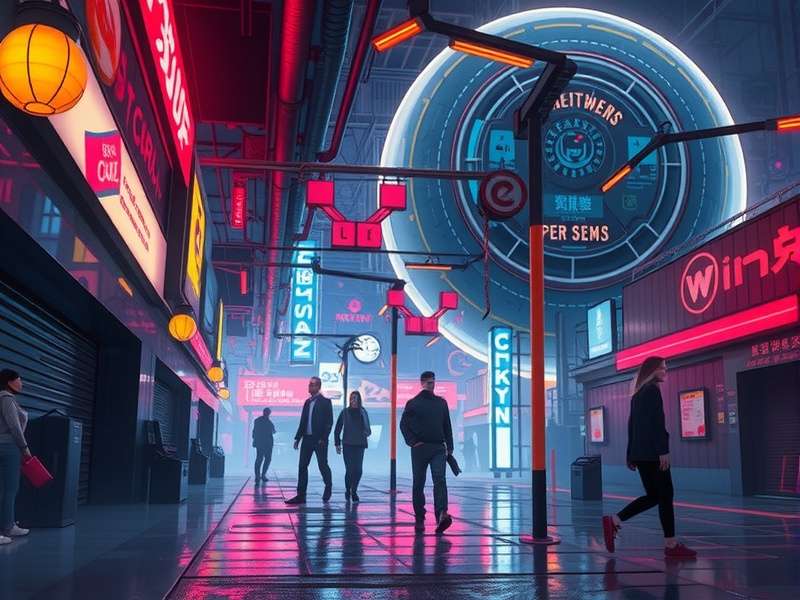
And speaking of visual aesthetics, the color palette of cyberpunk — deep blacks, electric blues, hot pinks, and acid greens — has become a global design language. Want to bring that energy to your desktop? Grab a Blue Cyberpunk Background or go ultra-HD with a Cyberpunk Background 4k — your screen deserves to look like it belongs in Night City.